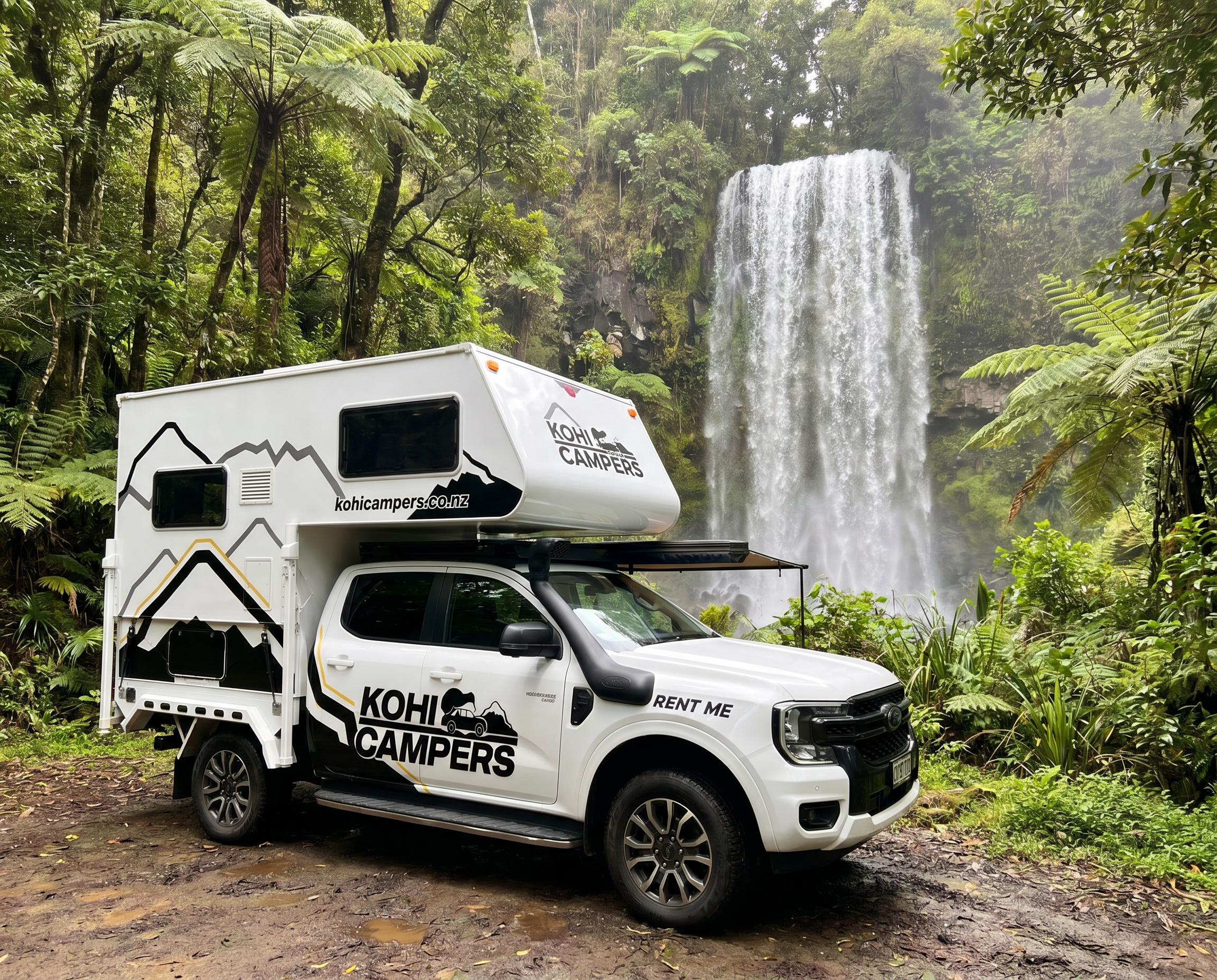
The Coromandel Peninsula sits just two hours east of Auckland but feels completely removed from city life. A rugged spine of bush-covered ranges runs down the centre of the peninsula, with sheltered western harbours on one side and exposed, dramatic surf beaches on the other. With a self-contained setup and a 4WD, you can get into corners of the Coromandel that most visitors driving hire cars never reach.
Getting there
Cross the Bombay Hills south of Auckland and head east on SH2 through Thames, or take the more scenic route via Coromandel town on the western side. Thames is your last major supermarket stop before the peninsula gets properly remote — stock up here.
Where to camp
The Coromandel has some of the best freedom camping in the North Island once you are self-contained certified. Spots worth checking on CamperMate:
- Hahei Beach — base for Cathedral Cove, right on the beach
- Hot Water Beach — park up overnight and dig your own hot pool at low tide in the morning
- Fantail Bay — remote northern tip of the peninsula, accessible via unsealed road, completely worth it
- Stony Bay — eastern coast, end of the road, stunning and rarely busy
Check current rules with Thames-Coromandel District Council as some spots have seasonal restrictions.
What to do
Cathedral Cove — New Zealand’s most photographed sea arch. Walk in from Hahei (45 minutes each way) or take the seasonal water taxi. Go early morning to beat the crowds, ideally just after sunrise. The walk through the reserve is as good as the destination.
Hot Water Beach — arrive two hours either side of low tide, hire a spade from the cafe, and dig into the volcanic sand to create your own thermal pool. Genuinely one of New Zealand’s most unique experiences. Check the tide chart the night before.
Coromandel Town — the peninsula’s most characterful township. Good cafes, a smoked mussel shop that has been there for decades, and the historic Coromandel Goldfield Centre nearby.
Driving Creek Railway — a quirky narrow-gauge railway winding up through native bush to a clifftop viewing platform. Worth two hours of your afternoon.
Whangapoua and New Chums Beach — one of the most beautiful and least-visited beaches in New Zealand. A short walk through private farmland (access permitted, be respectful) leads to a completely undeveloped beach with no facilities and no crowds. The Ranger makes the rough access track easy.
Pinnacles Track — a challenging overnight hike in the Kauaeranga Valley. The summit views stretch from the Firth of Thames to the Pacific. Book the DOC hut well in advance in summer.
Best time to visit
Christmas to February is peak season and the peninsula gets genuinely busy. The best Coromandel experience is late February through April when the weather is still settled, the water warm, and the crowds largely gone. The eastern bays are particularly good in autumn when the light turns golden and you can have Cathedral Cove virtually to yourself.
Practical notes
- The road to Fantail Bay and the northern tip involves significant unsealed sections — fine in the Ranger but not suitable for standard campervans
- Thames is the last reliable fuel stop heading up the western side — Whitianga on the eastern side is your next option
- Mobile coverage is limited on the eastern coast and non-existent in the Kauaeranga Valley
- The Coromandel is popular with Auckland weekenders in summer — arrive Thursday or Monday to avoid the busiest periods
Suggested itinerary — 4 nights
| Day | Route |
|---|---|
| Day 1 | Auckland to Thames, stock up, drive to Coromandel Town. Evening walk. |
| Day 2 | Driving Creek Railway, north to Fantail Bay via unsealed road. Remote camp. |
| Day 3 | South to Whitianga, New Chums Beach afternoon. Camp Hahei. |
| Day 4 | Cathedral Cove sunrise walk, Hot Water Beach low tide. Camp nearby. |
| Day 5 | Slow drive back via Tairua, Whangamata, and SH2 through the Karangahake Gorge. |
Ready to explore the Coromandel?
The fleet books out fast. Lock in your dates now.Check availability